There is a question that hovers over every elite athlete at some point in their career, though most will tell you it never quite announces itself when it arrives. For Gabriela Juarez-Rivas, it came somewhere in the middle of a season that had already taken more than its share from her. After finishing fifth at the U.S. Championships in January and watching three of her teammates head to the Milan Olympics without her, after college rejection letters started arriving on top of everything else, the weight of it all stacked up into something she didn't have a name for yet. The question was simple and it was devastating: is this still worth it?
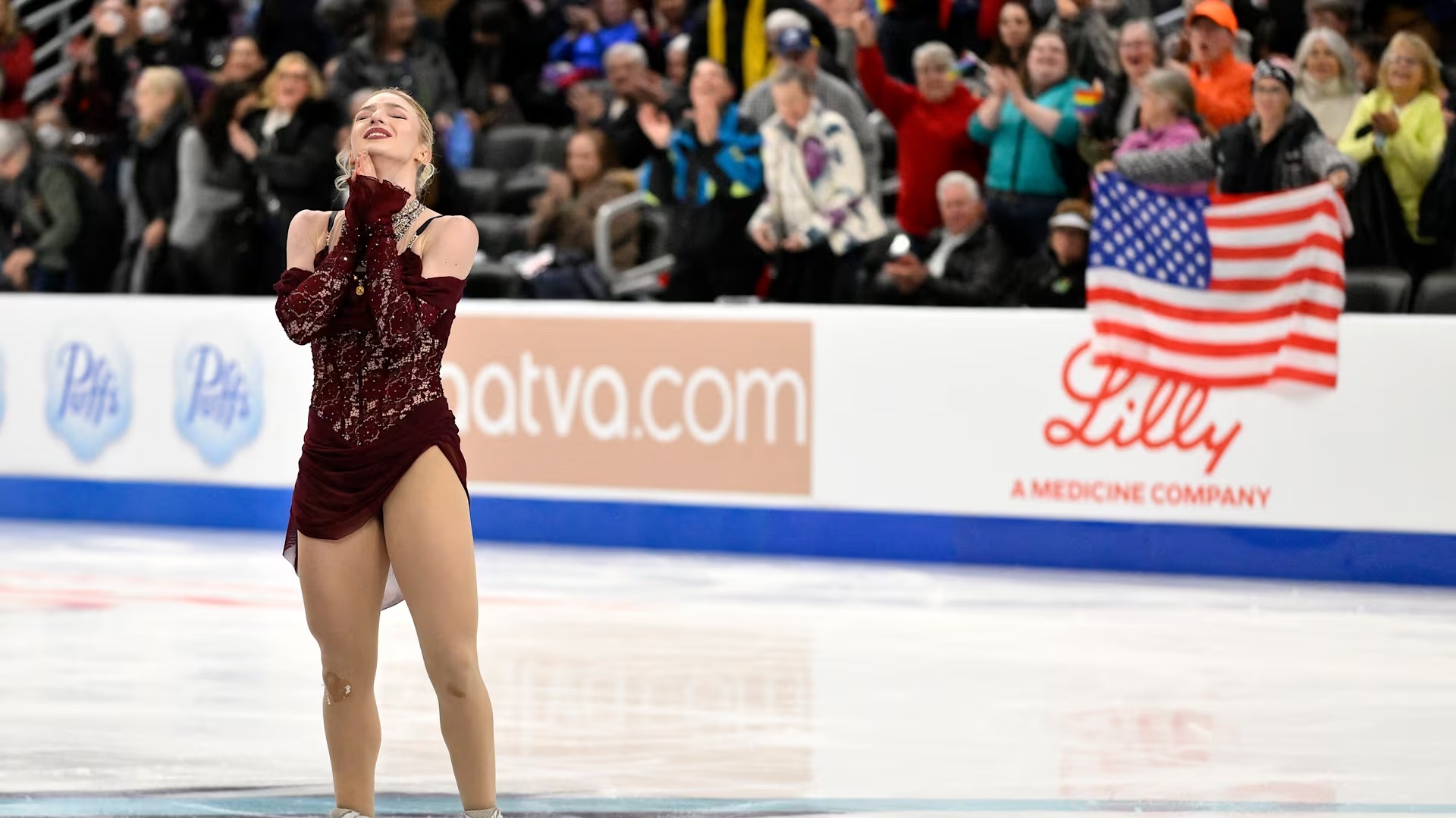
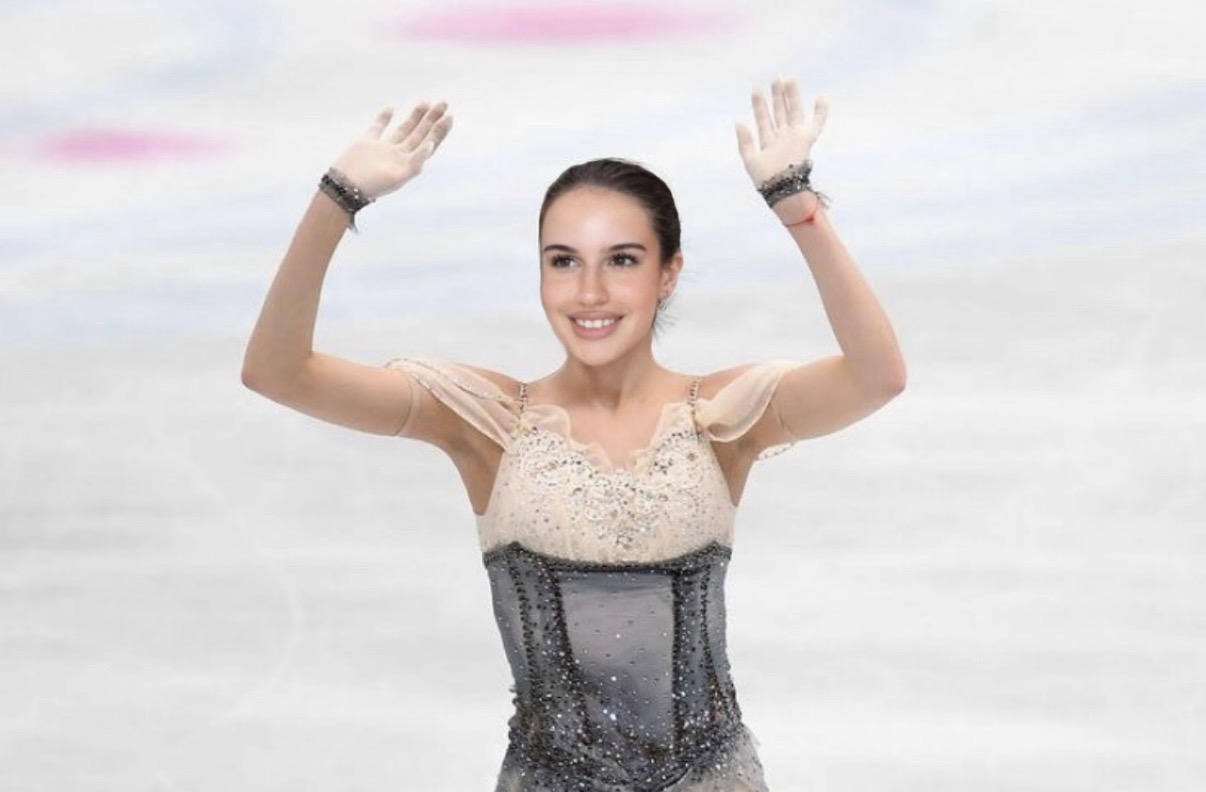
Two months later she was standing on the podium at the ISU Figure Skating World Championships 2026 in Prague, Czech Republic, with a bronze medal around her neck. But she is very clear that the good ending does not erase what the middle looked like. She wants to talk about both.
"I Love Figure Skating"
You've been skating since you were five. But you also did rhythmic gymnastics and swimming before skating really took over. What do you remember about those early years?
I did rhythmic for a little while and swimming too, and I liked them, but skating was just different from the beginning. There was something about being on the ice that felt right in a way the other things didn't. I think my parents could tell. By the time I started competing at seven it was pretty clear that skating was the thing.
You came up through public school through middle school, then a private high school full time. A lot of skaters go the online route. What was keeping up with that schedule like?
It was a lot of early mornings, that's what I remember most. My mom would drive me before sunrise, I'd get a couple hours on the ice and then go to school. I did that for years. I never wanted to do online school and I don't think my parents really pushed me toward it either. Having school as its own world was really important, especially as the skating got more serious. I needed somewhere to be where nobody was talking about scores or competitions or any of it. Just normal classes and my friends and existing as a regular person for a few hours. I think without that I would have burned out a lot sooner.
When did the weight of competing start to feel heavier?
Pretty gradually. When I was little it was just fun, I loved it, competitions were exciting. The pressure built up slowly as I got older and at some point I just started burying it and training through it without ever really addressing it. That works until it catches up with you.
Take me back to two seasons ago. You'd just won Junior Worlds, you were heading into your senior debut. What was going through your head?
I thought I had figured it out, which was probably the worst thing I could have thought. I had worked so hard and it paid off and I went into that senior season trying to keep achieving the same results instead of just skating. I was putting in the same work and things weren't coming together and I couldn't understand why. So I just pushed harder, which made everything worse. I didn't really see it for what it was until later.
And that carried into this past season too?
Yeah, same thing underneath, different competitions. Some programs felt completely empty even when technically I was doing everything right. Others I really fell apart in. By the time Nationals came around I had been carrying all of that for so long that it just showed up in how I skated.
"That's When I Cried the Most"
Walk us through Nationals. It was an emotional night for you.
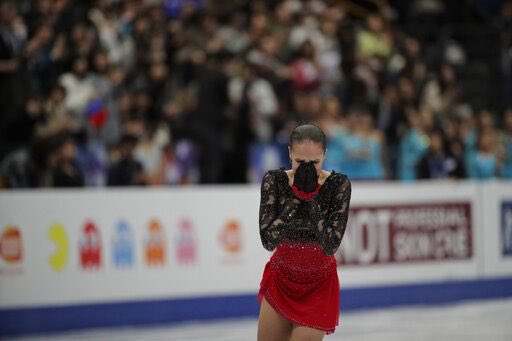
I knew it was going to be close. The short program was okay. The free skate I knew the second I came off the ice that it wasn't enough. I couldn't hold it together and I cried in the kiss and cry, on camera, which wasn't planned, it just happened because I already knew. And then watching Isabeau, Alysa and Amber skate the rest of the night — they were so good. They skated exactly the way you have to skate to make an Olympic team. I went back to the hotel with my coaches and some of the other girls who I knew were likely going to be announced, and it sounds like it would have been a really uncomfortable situation but it wasn't at all. These are people I've been competing with my whole career. It was just a lot of different feelings in one room.
The team was announced the following morning. What was that like?
That's when I cried the most, and it wasn't really about me anymore. I woke up thinking about Isabeau and Alysa and Amber. I've competed alongside those girls since we were kids and I love them and they were about to find out they were going to the Olympics. That just completely took over everything else I was feeling. I was so happy for them. That part I would not change.
How did it feel watching the Team USA coverage, seeing Isabeau get that spot specifically?
Isabeau is one of my closest friends, so I want to be real about it rather than just give the easy answer. I was happy for her, she skated brilliantly and she earned it completely. But it was hard too. I was proud of her and it hurt at the same time, and I just had to sit with that.
You watched the Milan Games as the first alternate. What was that whole experience like?
I watched everything. It was hard at times but I wanted to be there for the people I care about competing. You're rooting for everyone and at the same time you know you wanted to be there. You can't really separate those two things.
Ilia Malinin had a really tough Games. How was that to watch?
Really hard. Watching someone that close to you go through something that painful in front of the whole world, in a sport where every single moment is so exposed, is a lot to process. I think we'll both be sitting with what happened at those Olympics for a long time. Neither of us will be over it as quickly as we might let on in interviews. That's just the truth.
Is missing the Olympic team something you'll fully get over?
I say the right things when people ask and I mean them when I say them. But there will be days for a long time where it just doesn't feel okay, where it feels like exactly what it is, a thing that happened that I can't go back and fix. Making peace with something and being over it aren't the same thing. I've had to learn that. I think that's true for me and I think it's true for Ilia too.
"He Sees Everything"
You have talked about what Rafael Arutyunyan means to you mentally. What about technically, what has he actually changed in your skating?
A lot of the foundational things. The way I approach my jumps is completely different now. He explained the mechanics in a way no one had before, the entry positions, how my body was working against itself in certain jumps, especially my flip. He also gave me harder transitions into my jumps which costs energy but adds GOE when you execute them cleanly. It changed the way I understand what I am actually doing on the ice.
The backloading is your signature at this point. Where did that actually come from?
My programs last season were Don Quixote and Black Swan so they had me go watch both ballets and really observe them. And I was watching Don Quixote and I just noticed that Kitri saves her most explosive and difficult dancing for the very end. The whole performance builds toward that final section and she is at her most powerful when she should be the most tired. I mentioned it to Rafael and he said, that is actually how your programs can work too. He already knew my stamina was strong, that was never really the issue. But building a program specifically designed around that, where the hardest content is intentionally in the last third, that was a completely different kind of training. It was probably the hardest stretch of work I have done. When it works though you are picking up GOE at the end of your program when other skaters are fading and that adds up fast.
He has a reputation for being very direct with his skaters.
Very. He is blunt, he tells you straight up what is not working and what needs to change. You have to be self-motivated and genuinely willing to put in the effort or it is not going to work with him. There is no hand-holding. But that is also why he has worked with so many champions. At this point he is more of a mentor than a coach to me. He checks in, he cares about what is going on outside of skating, and when things got hard this season he was one of the people I leaned on.
"I Love Figure Skating. That Was It."
College results were coming in around that same time. What did that add?
The college stuff was hard on top of everything else in a way I wasn't really prepared for. There have always been people who questioned whether I could actually manage both, whether skating and school at the same time were realistic, and some people who just doubted whether I had what it took in skating at all. And when the rejections came in on top of Nationals and then everything with Milan, it felt like all of those people were right. Like everything I had been trying to prove was going in the wrong direction all at once. That was probably the worst point of the whole thing.
When did you really hit a wall mentally?
There was this stretch where I started questioning things I had never questioned before, whether I was actually built for this level, whether I could keep going like this. And I remember letting myself think something I never had before. Maybe this isn't the right sport for me, if I can't get the hang of it.
Had that ever crossed your mind before?
Never. It felt wrong to even go there because skating has been everything since I was five years old. But I was worn down enough that I was looking at it like I didn't know it anymore.
What did you do with it?
I talked to Rafael about it. He's very straightforward, he doesn't sugarcoat things. He basically told me that the doubt wasn't the problem, the problem was letting it make decisions for me. He said you already know what you want, you're just scared of it. Which was hard to hear but he was right. At some point he asked me, why can't you just walk away then? If it's really not working, just decide and leave. Why can't you do that? I started to answer and stopped. Because the answer was right there.
What was it?
Because I love figure skating.
Does it feel strange being this open when from the outside this looks like such a great moment for you?
A little. But I think it's worth saying. A lot of people saw the World Championship result and figured the whole season must have gone pretty well. It ended really well and I'm so grateful for that. But there was a really long stretch in the middle that was one of the hardest things I've been through, and I don't want to gloss over it just because it ended okay. If somebody reads this and they're going through something similar and it helps them feel less alone in it, then it was worth saying.
What are you most proud of looking back at all of it?
That I stayed. When the only reason I had left was that I love this sport, I stayed anyway. The medal means so much to me. But that decision, in the middle of everything when I had no idea Prague was coming, that one is mine.
For more on Gabriela Juarez-Rivas and the rest of the U.S. Figure Skating National Team, visit usfigureskatingnews.com/roster.